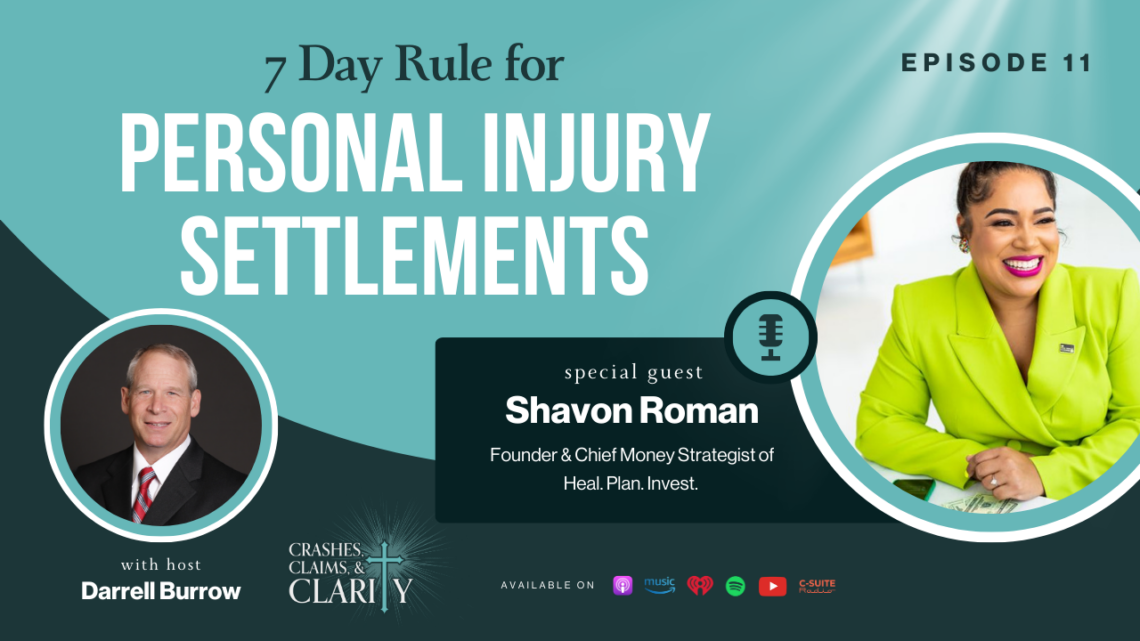
As an Athens, GA personal injury lawyer, Darrell Burrow has seen firsthand how a financial recovery can provide much needed stability after a serious accident. However, receiving a settlement is not always the end of the journey. It is often the beginning of important decisions that can affect a person’s long term financial well being. In this episode of Crashes, Claims & Clarity, Darrell sits down with financial strategist Shavon Roman to discuss the challenges accident victims may face after receiving a settlement and why thoughtful planning, patience, and informed decision making can play a critical role in protecting their future.
Why Your First Financial Decision After a Settlement May Be the Most Important One
After months or even years of medical appointments, insurance negotiations, legal proceedings, and uncertainty, the settlement check finally arrives.
For many accident victims, it represents relief.
Relief that medical bills can be paid.
Relief that financial pressure can ease.
Relief that a difficult chapter is finally coming to a close.
But according to financial strategist Shavon Roman, the moment a settlement arrives is also when some of the biggest financial mistakes can occur.
In Episode 11 of Crashes, Claims & Clarity, host Darrell Burrow sits down with Shavon Roman, Chief Money Strategist at Heal. Plan. Invest., to discuss what happens after the settlement check arrives and why slowing down may be the smartest financial move a person can make.
The Biggest Mistake People Make
Most people assume that receiving a settlement automatically solves their financial problems.
In reality, a settlement often creates a completely new set of decisions.
Family members may have opinions.
Friends may have suggestions.
Long overdue purchases suddenly seem urgent.
The temptation to celebrate can be overwhelming.
According to Shavon, this is exactly why she recommends what she calls the 7 Day Rule.
Her advice is surprisingly simple:
Do nothing.
Deposit the check.
Let it clear.
Take a breath.
And make no major financial decisions for at least seven days.
For many people, that pause can prevent costly mistakes.
Why Settlements Create Financial Stress
It may seem strange that receiving money could create anxiety.
But for many accident victims, it does.
Especially when the settlement amount is larger than any amount of money they have managed before.
Questions begin to surface immediately.
Should I buy a new car?
Should I pay off debt?
Should I invest?
Should I help family members?
Should I move?
Should I quit my job?
The pressure can be intense.
Shavon explains that many people fear making the wrong decision or worry that the money will disappear quickly. That anxiety often leads to rushed choices instead of thoughtful planning.
Day Eight: Focus on Stability
Once the seven-day pause has passed, Shavon recommends focusing on one thing:
Stability.
Not luxury.
Not upgrades.
Not celebration.
Stability.
That means making sure the essentials are covered first.
Housing.
Utilities.
Food.
Transportation.
Insurance.
Medical care.
Any immediate financial obligations that create stress should be addressed before anything else.
The goal is not to spend money.
The goal is to create breathing room.
Beware of the Big Purchase Trap
One of the most common mistakes Shavon sees is the immediate purchase of expensive items.
A new vehicle.
Furniture.
A larger home.
Gifts for friends and family.
These purchases often happen before people fully understand what their long term financial picture looks like.
A settlement may feel large in the moment.
But when future medical expenses, lost income, rehabilitation, and everyday living costs are considered, the amount available can shrink quickly.
Her message is clear:
Avoid making large purchases until a complete plan is in place.
The Three Bucket Strategy
After stability has been established, Shavon recommends organizing settlement funds into three categories.
Bucket One: Income
This bucket provides money needed for monthly living expenses.
The goal is creating consistent cash flow so bills can be paid without financial panic.
Bucket Two: Access
Life happens.
Cars break down.
Appliances fail.
Unexpected expenses appear.
This bucket creates a reserve that can be accessed when emergencies arise without disrupting long-term plans.
Bucket Three: Future
Only after stability and emergency access are addressed should attention turn toward long-term planning.
This bucket focuses on future goals, future security, and future opportunities.
Recovery Is About More Than Money
One of the most powerful moments in the conversation comes when Darrell asks Shavon how she defines recovery.
Her answer is not financial.
It is emotional.
Recovery is peace.
It is being able to lie down at night knowing your family is safe.
Your bills are paid.
Your needs are met.
And your future is not controlled by fear.
For many accident victims, financial recovery and emotional recovery are deeply connected.
When financial stress decreases, healing often becomes easier.
Three Things Everyone Should Do
Whether or not someone receives a settlement, Shavon offers three practical recommendations.
Eliminate High-Interest Debt
Credit cards with double digit interest rates create long term financial pressure and often prevent wealth building.
Manage Risk
Review insurance coverage.
Understand your protections.
Make sure future risks are properly addressed.
Plan for the Future
Create a will.
Review beneficiary designations.
Think about long-term goals.
Protect the people who depend on you.
Trust Yourself
Perhaps the most important advice Shavon offers is this:
Trust yourself.
Many people become so afraid of making mistakes that they become paralyzed.
Shavon reminds listeners that they have already survived difficult circumstances.
They have overcome challenges.
They have navigated uncertainty.
And they are capable of making thoughtful decisions moving forward.
The key is not rushing.
The key is creating a plan.
The Bottom Line
A settlement is not the finish line.
It is the beginning of a new chapter.
The decisions made during the first few weeks after receiving settlement funds can have a lasting impact on financial stability, emotional well-being, and future opportunities.
Before making major purchases or acting on outside pressure, take a breath.
Slow down.
Focus on stability.
Build a plan.
And remember that true recovery is not measured by what you buy.
It is measured by the peace you create.
Listen to the Full Episode
Episode 011: 7 Day Rule for Personal Injury Settlements
About Crashes, Claims & Clarity
Hosted by Darrell Burrow, founder of Burrow & Associates, Crashes, Claims & Clarity helps accident victims navigate the legal, medical, financial, and emotional challenges that follow a serious injury. Through conversations with experts, attorneys, medical professionals, and financial strategists, the podcast provides practical guidance for rebuilding life after an accident.