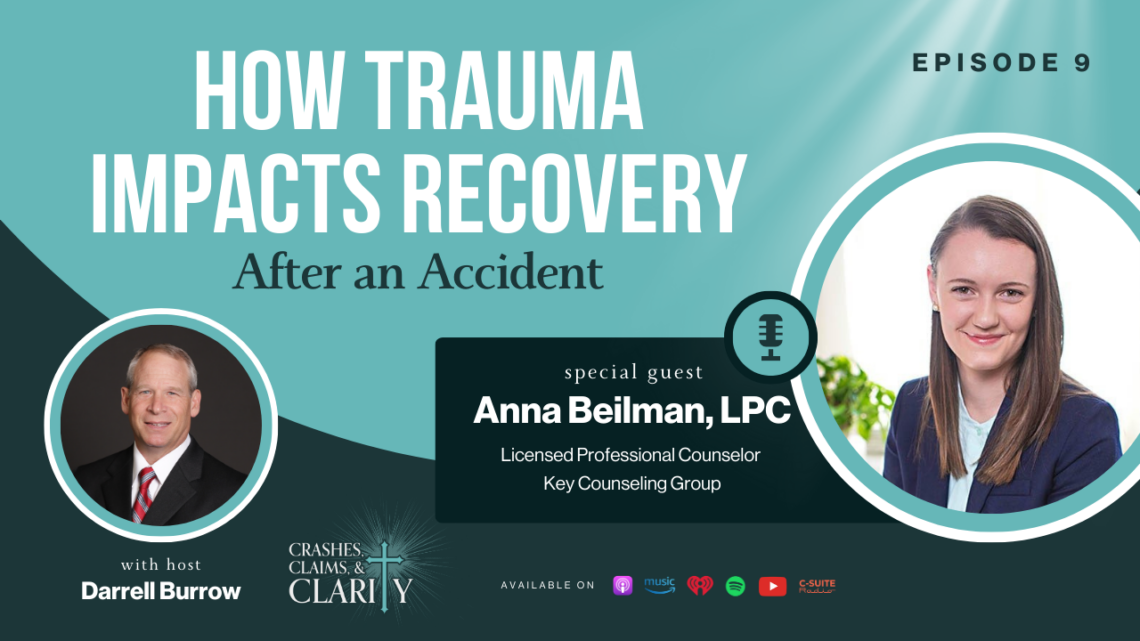
As an Athens, GA truck accident lawyer, Darrell Burrow understands that serious collisions often leave victims facing challenges that extend far beyond visible physical injuries. While medical treatment focuses on repairing the body, the emotional effects of a traumatic crash can be just as significant and, in some cases, even longer lasting. In this episode of Crashes, Claims & Clarity, Darrell speaks with licensed professional counselor Anna Beilman about the hidden impact of trauma, the ways emotional distress can affect recovery, and why addressing mental and emotional health is an important part of the healing process after an accident.
The Hidden Injury That Can Slow Healing Long After the Crash
When people think about recovering from an accident, they usually focus on physical injuries.
Broken bones.
Whiplash.
Back pain.
Concussions.
Medical appointments.
Physical therapy.
But recovery is often about much more than healing the body.
For many accident victims, the emotional impact of a traumatic event can linger long after the physical injuries begin to improve. Anxiety, fear, sleep problems, and emotional distress can quietly interfere with every aspect of daily life, creating barriers to recovery that are often overlooked.
In Episode 9 of Crashes, Claims & Clarity, host Darrell Burrow sits down with licensed professional counselor Anna Beilman to discuss how trauma affects accident victims and why emotional recovery deserves just as much attention as physical healing.
Not Every Injury Shows Up on a Scan
One of the biggest challenges accident victims face is that emotional injuries are invisible.
No X-ray can reveal anxiety.
No MRI can measure fear.
No CT scan can show panic attacks or sleepless nights.
Yet these symptoms are often very real.
According to Anna, some of the most common trauma responses following an accident include:
- Difficulty sleeping.
- Irritability.
- Brain fog.
- Difficulty concentrating.
- Anxiety.
- Panic.
- Emotional numbness.
- Constant feelings of being on edge.
Because these symptoms are not visible, many people dismiss them or assume they will eventually disappear on their own.
Unfortunately, that is not always what happens.
Why Two People Can Experience the Same Accident Differently
One of the most important lessons from Anna’s interview is that trauma is highly personal.
Two people can be involved in the exact same collision.
One person may recover emotionally with very few lingering effects.
The other may struggle for months.
The difference is not weakness.
The difference is how each person’s nervous system processes the event.
Trauma occurs when the brain perceives a serious threat to safety. Even after the immediate danger has passed, the nervous system may continue operating as though the threat still exists.
In other words, the accident may be over, but the body has not gotten the message.
When the Nervous System Gets Stuck
After a traumatic event, the body’s natural response is to become more alert.
This response is designed to protect us.
The problem occurs when the nervous system does not fully return to normal.
When that happens, people may experience:
- Hypervigilance.
- Avoidance.
- Increased anxiety.
- Emotional outbursts.
- Difficulty relaxing.
- Persistent fear.
- Trouble sleeping.
The person may know logically that they are safe.
Their nervous system simply has not caught up yet.
The Impact on Relationships
Trauma rarely affects only the injured person.
It often impacts spouses, children, coworkers, and friends.
Family members may become frustrated because they do not understand why recovery is taking so long.
Coworkers may notice changes in mood or performance.
Friends may not understand why someone seems withdrawn or different.
Comments such as:
“You should be over this by now.”
“At least you’re okay.”
“It could have been worse.”
Are often intended to be helpful.
Instead, they can make people feel misunderstood and isolated.
Sometimes the most powerful thing we can do is simply listen.
Warning Signs That Someone May Need Help
Anna encourages family members, attorneys, and healthcare providers to pay attention when symptoms begin interfering with daily life.
Some warning signs include:
- Avoiding driving after an accident.
- Refusing to return to work.
- Persistent anxiety.
- Emotional withdrawal.
- Sleep disturbances.
- Panic attacks.
- Difficulty functioning in everyday situations.
The key question is simple:
Are things getting better or getting worse?
If symptoms continue to interfere with daily activities, professional support may be beneficial.
Children Experience Trauma Differently
Children can be deeply affected by accidents, even when they are not physically injured.
A child who witnesses a parent being hurt may experience significant emotional distress.
Unlike adults, children often lack the language to explain how they feel.
Instead, trauma may appear through behavior changes, sleep problems, fear, emotional outbursts, or withdrawal.
Early support can help children process these experiences in healthy ways and prevent long-term emotional difficulties.
Why Time Alone Is Not Always Enough
Many people believe emotional wounds simply heal with time.
Anna offers an important perspective.
Time itself does not heal trauma.
What matters is what happens during that time.
Without proper support, emotional injuries can become more deeply rooted and continue affecting relationships, careers, and overall quality of life.
Just as someone would seek treatment for a broken bone, there are times when emotional injuries deserve professional care as well.
The Bottom Line
Recovery after an accident is about more than physical healing.
The emotional impact of trauma can affect sleep, relationships, work performance, confidence, and overall well-being.
Ignoring those symptoms does not make them disappear.
Recognizing them early and seeking support when needed can play a critical role in helping accident victims fully recover.
Because sometimes the injuries that take the longest to heal are the ones nobody can see.
Listen to the Full Episode
Episode 09: How Trauma Impacts Recovery After an Accident
About Crashes, Claims & Clarity
Hosted by Darrell Burrow, founder of Burrow & Associates, Crashes, Claims & Clarity explores the medical, emotional, legal, and financial challenges accident victims face after a serious injury. Through conversations with experts and professionals, the podcast provides practical guidance to help people navigate recovery and move forward with confidence.